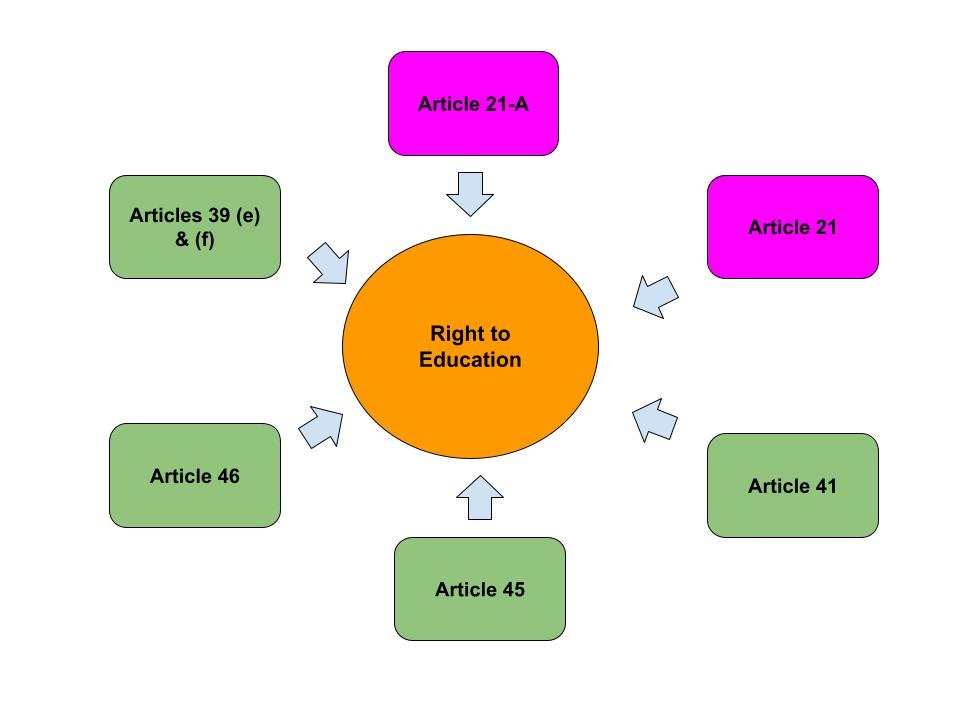
Introduction
Every year around admission season, I hear the same confusion from parents: “Does the Right to Education Act actually mean my child gets free schooling anywhere?” Not quite — and the gap between what people assume and what the law actually says causes a lot of unnecessary stress. Let’s clear up exactly what this law promises and where its limits lie.
What Is the Right to Education Act?
The Right to Education Act (RTE), 2009, guarantees free and compulsory education to every child aged 6 to 14 years as a fundamental right under Article 21A of the Constitution.
This was a big deal when it passed — India became one of over 135 countries to make education a constitutionally guaranteed right, not just a government policy or scheme.
Who Is Covered Under RTE?
The Act applies to all children between 6 and 14 years, covering elementary education from Class 1 to Class 8. Notably, it doesn’t currently extend to pre-primary education or secondary school (Class 9 onwards), which is a gap many education activists have pushed to fix over the years.
The 25% Reservation Rule in Private Schools
This is probably the most talked-about provision of the Right to Education Act. Private unaided schools must reserve 25% of entry-level seats for children from economically weaker sections (EWS) and disadvantaged groups, with the government reimbursing the schools for this.
Picture a family in Jaipur earning under the state’s EWS income threshold — their child can get admission into a reputed private school through this quota, something that would’ve been financially impossible otherwise.
What Counts as “Free” Education?
Under the RTE Act, “free” means the school cannot charge any fee, capitation fee, or expenses that would prevent a child from pursuing elementary education, and no child can be held back, expelled, or required to pass a board exam until Class 8.
This “no detention” policy has actually been controversial — some states have since amended it, allowing detention from Class 5 or 6 onwards, based on concerns about learning outcomes.
Key Provisions Parents Should Know
- No capitation fees or donation demands for admission
- No screening procedures or interviews for admission (for the child or parents)
- Prohibition on physical punishment and mental harassment
- Pupil-Teacher Ratio (PTR) norms schools must maintain
- School Management Committees with parent representation
I’ve noticed many parents don’t realize that “donation” demands during admission season are actually illegal under this Act — schools rely on parents simply not knowing their rights.
What Happens If a School Violates RTE?
Violations can be reported to the District Education Officer or the State Commission for Protection of Child Rights (SCPCR). Penalties for schools can include fines up to ₹1 lakh for unrecognized operation, and repeat capitation fee violations can attract fines up to 10 times the fee collected.
Common Challenges in RTE Implementation
Honestly, implementation has been patchy across states. I’ve seen private schools deliberately create “vacancy” ambiguity to avoid the 25% quota, delayed reimbursements causing schools to resist admissions, and parents simply unaware their child even qualifies. These aren’t flaws in the law itself so much as gaps in enforcement.
Does RTE Cover Higher Education?
No — and this is a common misunderstanding. The Right to Education Act specifically covers elementary education (age 6-14). Secondary and higher education fall under separate policies and schemes, not this particular constitutional guarantee.
[link to related guide on student legal rights here] [link to related guide on filing a complaint with the education department here]
FAQs
Q1. Does RTE apply to private schools too? Yes, private unaided schools must reserve 25% of entry-level seats under RTE for EWS children.
Q2. Can a child be expelled for poor academic performance under RTE? No, the Act prohibits expulsion or detention until Class 8 in its original form, though some states have amended this.
Q3. Is pre-school covered under the Right to Education Act? No, the Act currently covers only ages 6 to 14, excluding pre-primary education.
Q4. What documents are needed for RTE admission in private schools? Typically income certificate, caste certificate (if applicable), address proof, and the child’s age proof.
Q5. Who reimburses private schools for RTE admissions? The respective state government reimburses schools based on prescribed per-child costs.
Conclusion
The Right to Education Act isn’t just a policy footnote — it’s a constitutional promise that every child deserves a shot at quality education, regardless of family income. If you believe your child qualifies for the 25% quota or a school is violating RTE norms, don’t stay quiet about it. File a complaint with your District Education Officer and make sure your child gets what the law already guarantees them.
Suggested Image Alt Text:
- “Right to Education Act 25% reservation infographic”
- “Children in classroom under RTE Act India”
- “RTE admission document checklist for parents”