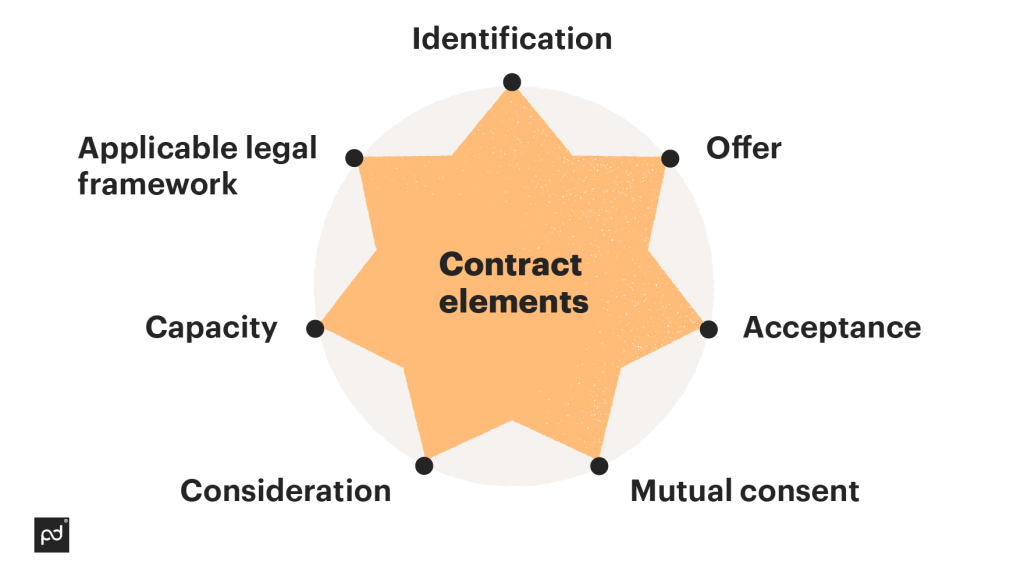
Introduction
Anyone can write “I agree to pay ₹50,000 by March” on a piece of paper and call it a contract. Whether that document actually protects you in court is a completely different story. A legally binding contract needs specific elements to hold up — and I’ve seen too many small business owners learn this the hard way, usually after a deal has already gone sideways.
The Basic Ingredients of a Valid Contract
Under the Indian Contract Act, 1872, a contract needs four core elements to be enforceable: offer, acceptance, consideration (something of value exchanged), and the intention to create legal relations. Miss any one of these, and you might just have a friendly agreement, not a legally binding contract.
Direct answer: A legally binding contract requires a clear offer, acceptance, lawful consideration, and mutual intent to be legally bound — verbal agreements can qualify too, but written contracts are far easier to enforce.
Step 1: Identify the Parties Clearly
Sounds obvious, but this trips people up constantly. Use full legal names, not nicknames or business shorthand. If it’s a company, mention the registered entity name, not just the brand name people casually use.
Step 2: Define the Terms Precisely
Vague language is the number one reason contracts get disputed. “Payment will be made soon” means nothing legally. “Payment of ₹1,00,000 will be made within 15 days of invoice date” is enforceable.
- Specify exact amounts, dates, and deliverables
- Avoid ambiguous words like “reasonable time” or “as needed” without defining them
- Mention currency and payment method clearly
Step 3: Include Essential Clauses
A solid legally binding contract typically includes:
- Scope of work or subject matter
- Payment terms and schedule
- Termination conditions — how either party can exit
- Dispute resolution mechanism (arbitration, jurisdiction, mediation)
- Confidentiality clause, if sensitive information is involved
- Force majeure clause, covering unforeseeable events
Step 4: Get the Consideration Right
Consideration is what each party gives up or receives — money, service, goods, or even a promise. Without consideration, courts generally won’t treat it as an enforceable contract, no matter how formally it’s written.
Step 5: Add Signatures and Witnesses
Both parties must sign, ideally with the date. While not always mandatory, having witnesses adds an extra layer of credibility if the contract is ever challenged. For high-value agreements, notarization is worth the small extra effort.
[link to related guide on document notarization here]
Common Mistakes People Make
I’ve noticed the same errors repeating across contracts drafted without legal help:
- No clear termination clause, leading to messy exits
- Skipping the dispute resolution clause entirely
- Using templates copied online without adapting to the actual deal
- Forgetting to date the document
Do Contracts Need to Be on Stamp Paper?
For many contracts, yes — stamp duty requirements vary by state and contract value. Skipping stamp duty doesn’t necessarily void the contract, but it can create admissibility issues if you ever need to present it as evidence in court.
FAQ
Q1. Is a verbal agreement legally binding in India? Yes, verbal contracts can be enforceable, but proving the exact terms in court is much harder without written evidence.
Q2. Do I need a lawyer to draft a contract? Not always for simple agreements, but for high-value or complex deals, it’s genuinely worth the fee to avoid costly disputes later.
Q3. What makes a contract void instead of just breachable? Contracts involving illegal purposes, minors, or fraud are void from the start, not just breached later.
Q4. Does a contract need to be notarized to be valid? No, notarization isn’t mandatory for validity in most cases, but it strengthens evidentiary value.
Q5. Can a contract be changed after both parties sign it? Yes, through a mutually signed amendment or addendum, not by one party unilaterally editing terms.
Conclusion
Drafting a legally binding contract isn’t about using complicated legal jargon — it’s about being specific, clear, and covering the “what if this goes wrong” scenarios upfront. Whether you’re finalizing a freelance deal or a business partnership, take the extra hour to get the clauses right. It’s a lot cheaper than a legal dispute later. When in doubt, get a lawyer to review it before signing — that one-time cost is small insurance against a much bigger headache