Introduction
Ask ten people what fundamental rights and duties actually mean, and you’ll probably get ten vague answers involving “freedom” and “being a good citizen.” Fair enough — school textbooks don’t exactly make this exciting. But these aren’t just constitutional trivia; they genuinely affect what you can and can’t do, and what the government owes you versus what you owe the nation. Let’s actually break this down properly.
What Are Fundamental Rights?
Fundamental rights are basic freedoms guaranteed to every citizen under Part III of the Indian Constitution, enforceable directly in the Supreme Court or High Courts if violated.
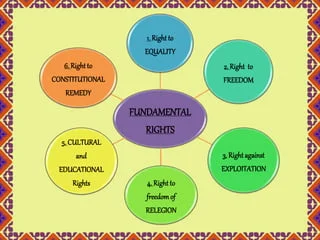
There are six categories currently: Right to Equality, Right to Freedom, Right against Exploitation, Right to Freedom of Religion, Cultural and Educational Rights, and Right to Constitutional Remedies. The Right to Property, interestingly, used to be a fundamental right but was downgraded to a legal right in 1978 through the 44th Amendment.
Breaking Down Each Fundamental Right
Let’s go through them a bit faster:
- Right to Equality (Articles 14-18): No discrimination based on religion, race, caste, sex, or place of birth
- Right to Freedom (Articles 19-22): Speech, assembly, movement, and protection against arbitrary arrest
- Right against Exploitation (Articles 23-24): Bans human trafficking and child labour in hazardous jobs
- Right to Freedom of Religion (Articles 25-28): You can practice, profess, and propagate any religion
- Cultural and Educational Rights (Articles 29-30): Protects minority communities’ right to run their own institutions
- Right to Constitutional Remedies (Article 32): Called the “heart and soul” of the Constitution by Dr. Ambedkar himself
What Are Fundamental Duties?
Fundamental duties, added later through the 42nd Amendment in 1976, are listed under Article 51A. Unlike rights, these aren’t legally enforceable in court — you can’t be jailed for “not respecting the national flag” in a technical sense, though certain related laws do impose penalties.
There are 11 duties in total, including things like respecting the Constitution, protecting public property, preserving the environment, and developing scientific temper. I’ll be honest — most Indians can’t name more than two or three of these off the top of their head.
Why Rights Without Duties Don’t Work
Here’s my honest take: rights and duties were never meant to function separately. A right to a clean environment (read into Article 21 by courts) means little if citizens don’t fulfil their duty to protect natural resources. Picture a housing society in Jaipur that fights for its right to clean drinking water while simultaneously dumping garbage into the same groundwater source — that’s the gap between rights and duties playing out in real life.
Are Fundamental Duties Enforceable?
No, fundamental duties under Article 51A are not directly enforceable by courts, but Parliament can — and has — enacted laws that make certain duties legally binding, like the Prevention of Insults to National Honour Act.
This is a common point of confusion. Fundamental rights can get you a writ petition in court; fundamental duties generally can’t, unless backed by a specific statute.
Landmark Cases That Shaped These Rights
The Kesavananda Bharati case (1973) established that fundamental rights, while amendable, can’t be altered to destroy the “basic structure” of the Constitution. Maneka Gandhi v. Union of India (1978) expanded Article 21 hugely, reading in the right to live with dignity, not just physical existence.
Balancing Rights and Duties in Daily Life
I’ve noticed a pattern — people are far quicker to cite their rights than to acknowledge their duties. That’s human nature, honestly, and I don’t think Indians are unique in this. But a functioning democracy genuinely needs both sides working together, not just one.
[link to related guide on writ petitions here] [link to related guide on Article 21 explained here]
FAQs
Q1. How many fundamental rights are there in India currently? Six, after the Right to Property was removed as a fundamental right in 1978.
Q2. Can fundamental duties be enforced in court? Generally no, unless a specific law has been passed to enforce a particular duty.
Q3. Which article is called the heart of the Constitution? Article 32, dealing with the Right to Constitutional Remedies.
Q4. When were fundamental duties added? Through the 42nd Constitutional Amendment in 1976, based on the Swaran Singh Committee’s recommendations.
Q5. Can fundamental rights be suspended? Yes, certain rights can be suspended during a national emergency, except Articles 20 and 21.
Conclusion
Understanding fundamental rights and duties isn’t just for law students preparing for exams — it shapes how you interact with the state and your fellow citizens every single day. Rights protect you; duties remind you that freedom comes with responsibility. Next time you exercise a right, take a second to think about the corresponding duty — it’s a small habit that actually matters more than we give it credit for.