Introduction
Ask a founder what corporate governance means, and you’ll often get a blank stare followed by “isn’t that just for big listed companies?” That’s actually a common misconception, and a costly one. Corporate governance affects every company, whether you’re a startup with three employees or a listed giant with lakhs of shareholders. Let’s actually unpack what this term means and why it should matter to you.
What Does Corporate Governance Actually Mean?
Corporate governance refers to the system of rules, practices, and processes by which a company is directed and controlled, balancing the interests of shareholders, management, employees, and the wider community.
In plain English? It’s about who’s accountable to whom, and making sure no single person or group can run the company into the ground without checks in place.
Why Corporate Governance Matters More Than You Think
I’ve noticed that founders often treat governance as a compliance checkbox rather than something that genuinely protects their business. That’s a mistake. Poor governance is exactly what led to collapses like Satyam Computers back in 2009 — a case that’s still taught in every corporate law classroom in India, and for good reason.
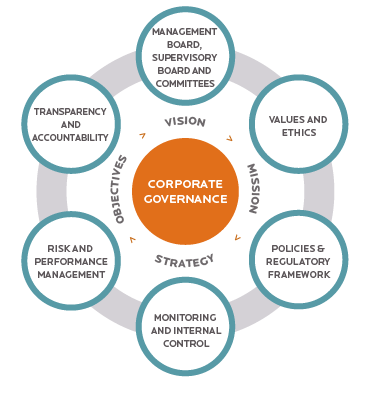
The Key Pillars of Corporate Governance
Let’s break down what actually makes up good corporate governance:
- Accountability: Directors and management must answer for their decisions
- Transparency: Financial and operational information should be disclosed honestly
- Fairness: All shareholders, including minority ones, deserve equal treatment
- Responsibility: The board must act in the company’s and stakeholders’ best long-term interest
Board of Directors: The Backbone of Governance
The board is where corporate governance meaning really translates into practice. Under the Companies Act, 2013, certain companies must have independent directors, women directors, and audit committees. Picture a mid-sized manufacturing company in Rajasthan expanding into exports — a strong, independent board can catch red flags in overseas contracts that an owner-only management might completely miss.
SEBI’s Role in Listed Companies
For listed companies, SEBI’s Listing Obligations and Disclosure Requirements (LODR) Regulations set out specific corporate governance norms, including board composition, related-party transaction disclosures, and whistleblower mechanisms.
This is stricter than what private companies face, but honestly, a lot of these principles are worth adopting voluntarily even if you’re not legally required to.
Common Governance Failures I’ve Seen
- Founders treating company funds as personal money (blurring the corporate veil)
- No proper minutes or documentation of board decisions
- Related-party transactions done without disclosure or approval
- Ignoring minority shareholder rights in family-run businesses
I’ll be honest — the third one is probably the most common issue I come across, especially in closely-held companies where the founder assumes “it’s my company, I can do what I want.” Legally, that’s not quite true once you’ve incorporated.
Corporate Governance vs Corporate Compliance
These terms get used interchangeably, but they’re not the same. Compliance is about following specific laws and filing deadlines. Governance is the broader philosophy and structure that determines how decisions get made in the first place. You can be fully compliant on paper and still have terrible governance if your board is a rubber stamp.
How Small Businesses Can Build Good Governance Early
You don’t need a 12-member board to practice decent corporate governance. Even a two-person startup can:
- Maintain proper minute books from day one
- Separate personal and company bank accounts strictly
- Document major decisions in writing, even informally at first
- Bring in an outside advisor or mentor for an unbiased perspective
Building these habits early saves enormous headaches when you eventually raise funding, because investors scrutinize governance closely during due diligence.
[link to related guide on private limited company registration here] [link to related guide on director duties under Companies Act here]
FAQs
Q1. Is corporate governance only for listed companies? No, private companies benefit from good governance too, even if legal requirements are lighter.
Q2. What law governs corporate governance in India? Primarily the Companies Act, 2013, along with SEBI LODR Regulations for listed entities.
Q3. What is the role of independent directors? They bring an unbiased perspective and help protect minority shareholder and stakeholder interests.
Q4. Can poor corporate governance lead to legal action? Yes, directors can face personal liability for governance failures like fraud or negligence.
Q5. Does a startup need a governance framework from day one? It helps significantly, especially when approaching investors who evaluate this during due diligence.
Conclusion
Understanding corporate governance meaning isn’t just an academic exercise — it’s about building a business that can survive scrutiny, scale responsibly, and attract serious investors. Whether you’re running a two-person startup or eyeing an IPO someday, the governance habits you build now will follow you. Start documenting your decisions properly today; future-you (and your investors) will thank you.